Route route is Roşiori de Vede – Coşoteni – Vedea – Dulceanca – Albeşti – Păru Rotund – Nenciuleşti – Buzescu – Nanov – Alexandria – Plosca – Peretu – Roşiori de Vede
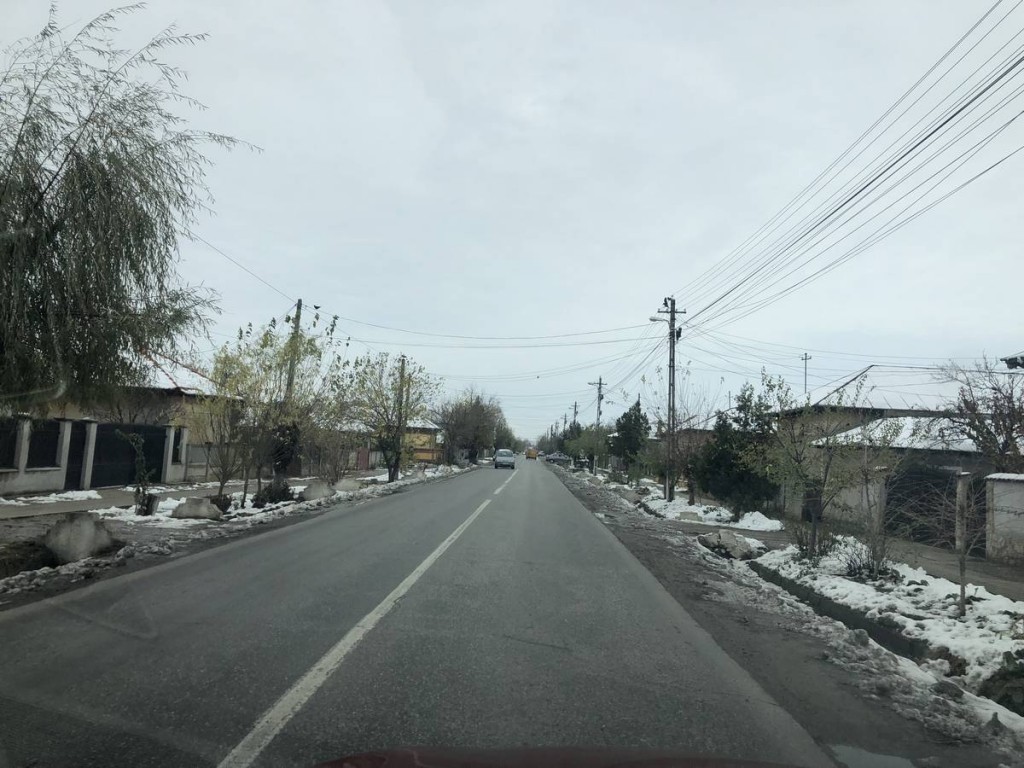
We leave the Red Roofs to Coşoteni on the DJ612A, and from here we go on the DJ601F and keep this county road along the Vedea River to the village of Nenciuleşti, passing through the following localities: Meri, Vedea, Dulceanca, Albeşt and Păru Rotund. From Nenciuleşti we get on DJ703 and we head down to Buzescu village, from where we head east E70 to Alexandria, passing through the village of Nanov.
We rest in Alexandria before heading off to the Red Roofs. From Alexandria we climb up Bucharest to the intersection with E70 from where we get off DN6F and we go on Alexandria’s ring road until we intersect with DJ703 that goes down to Buzescu village. From here we go on E70, we pass through Plosca and Peretu and get to Roşiori de Vede.
Aquaventure is one of the largest thermal baths and spa parks in Teleorman County.
Access to the adventure park requires a fee of 10 lei and for renting a sun lounger you have to pay the amount of 2,5 lei. Beginning with the last week of August, access to the park is free of charge.
Services available in the park include a restaurant and theme parties. Aquaventure’s daily schedule is from 9:00 to 22:30.
Rosiorii de Vede Train Station is a historic monument built in 1889.
In 1927, the royal family visited the Red Roses by descending from the train to the historic train station.
On April 11, 1944, the Ministry of Internal Affairs considers that sabotage actions against the German army are being organized within this station.
The oldest material traces of the people living in this area are from Neolithic and are evidenced by the existence of two settlements (called „city” residents) located in the current area of the city: „Palanca” and „Livezi”.
The History Museum of Rosiorii Vede, through its purpose of an institution focused on human personality training, joins together with other educational factors as an urgent need for the spiritual life of the city. Here visitors come in contact with the testimonies of the distant past, over which time has passed carefully, giving them the meaning of symbol.
The museum houses collections of archeology, numismatics, ethnography and urban ethnography, and historical and artistic archives. Neolithic materials, weapons and ceramics such as Dridu and Albesti are exhibited here, original documents and panels related to the 1907 uprising.
The Municipal History Museum in Roşiorii Vede houses the history of a 600-year-old settlement. This corner of the country has an extremely rich past, its presence in the history of the country being reflected in many materials resulting from the archaeological excavations in the area: the Mycenaean sword (14th century BC), the treasure of Peretus (4th century BC .), many iron tools and weapons in the Dacian fortress of Albeşti (4 – 3 BC), the Stone in Socetu (3rd, 4th century BC) with a Latin inscription and discoveries in Dulceanca sec. 4-6 BC).
Address: Soseaua Chiciului nr. 7, Calarasi 910088
Phone: 0721 908 413
In 1836, two years after Alexandru Dimitrie Ghica (1834-1842), the king of Wallachia founded the city, the inhabitants built a wooden church celebrating St. Alexander, which soon became too small for all the inhabitants. Therefore, after a solid effort, the bishopric of the city managed to build, between 1869 and 1898, the present Cathedral, consecrated by Metropolitan Iosif Gheorghian on 6 December 1898.
The cathedral impresses with its architectural gravity, but also with the imposing size: 42 m long, 26 m wide, the maximum height in the tower is 45 m high. The cathedral has the shape of an inward cross and an exterior ship with a beautiful guarded portal of corinthian columns.
Above the narthex there are two towers, where are the bells and the clocks. The decorative elements specific to St. Alexander’s Cathedral are: the painting on the wall and the altar screen (in a neo-gothic style, 10 m high) executed by the painter’s team made up of Constantin Artachino, Constantin Pascali and the famous Stefan Luchian in 1898 in Byzantine style , in the oil technique. In the same year the pavement of the marble mosaic was placed. On the altar screen, they later added the icons of St. Spiridon and St. Philofteia.
The big chandelier, the small chandelier and the emperor’s candlesticks were made of golden bronze by the Weidekamp Kettling A.C house in Vienna, through its representative in Bucharest, Hans-Herzog. The holy church underwent major repairs after the earthquakes of 1940 and 1977.
Alexandria Station has been SUPERIOR since 1895, passing through two wars and an earthquake, without time or calamities affecting its façade. The location of the station is the only building in the city that looks the same even after a century of its establishment.
Like all the other streets in Alexandria, it was designed by the Austrian Otto von Moritz, who made the city plans. The most important institutions in the first years of existence of Alexandria were on this street. Here were the mayor’s office, the polyclinic, the post office and the train station. It has also been the promenade for the city’s elite for many years.
At 61 years after the founding of Alexandria, the city’s train station appeared. The railway was created for economic reasons to connect directly the city with the most southern point of the country, Zimnicea. Expropriation procedures from the landowners on which the station was to be built lasted more than two years.
The construction of the railway station required the breaking of a street and the change of the original architecture of the city. The station was inaugurated in 1895, becoming the first building on the street called Train station Street for many years.
After 118 years of its establishment, the railway station remained the only city building whose appearance has not changed at all. The building where the railway station operates today went through two wars, but it was protected from bombing. The earthquake did not shake the building either. Both the exterior and the interior of the building preserve the appearance of 118 years ago, from the shape of the windows to the air vents. Even the brick, which is said to have been brought from Italy on the day of its construction, remained the same.
The building became a historic monument by the Ministry of Culture decision, being among the few monuments of this type in the county’s residence.
Address: Str. 1 May (Entrance to Municipal Police), 140074 Alexandria
Phone: 0745 616 147
Address: Alexandria, Teleorman County, sos.Alexandria-Rosiori, nr.1, 140001 Alexandria
Phone: 0247 406 013
Address: Strada Negru Vodă 100-102, Alexandria 140043
Telephone: 0247 312 904
Address: Street Oltului 32, Roşiori de Vede 145100
Phone: 0347 417 435
Address: Vedea Forest, Roşiori de Vede, Teleorman County
Phone: 0247 893 291
Address: Aleea Public Garden, Roşiori de Vede 145100
Phone: 0723 242 425
The „Danube On 2 Wheels” Project is co-financed by the European Union though the European Regional Development Fund, within the INTERREG V-A Romania – Bulgaria Programme.
The total eligible value of the project is EUR 497.713,26, of which EUR 423.056,25 represents the value of the European Union contribution through the European Regional Development Fund.
The content of this website does not necessarily represent the official position of the European Union. The initiators of the site are the sole responsibles for the information provided through the site.
www.interregrobg.eu
Route Alexandria – Peretu – Roşiori de Vede – Vedea – Nanov – Alexandria
Touristic objectives in area
Aquaventura Park, Rosiorii de Vede
The Roşorii de Vede Railway Station
Municipal Museum of History, Roşiorii de Vede
3 stars Albatros Tourist Complex and Restaurant
St. Alexander’s Cathedral, Alexandria
Alexandria Railway Station
Red Hotel
Hanul cu Noroc Inn
Unicom Wine Cellar
President Guesthouse
La Nicu Dorilă Restaurant-Guesthouse
Mon Jardin
Do you want more details?
- About the project
- AISSER
- Useful information
- Indicators
- „Danube on 2 Wheels” Tourist Center (ACTIS Sport Club – Calarasi)
- „Danube on 2 Wheels” Tourist Center ( „Sport for you and me – Sports Club Canoeing” Association – Belogradchik)
- Level – Medium / Advanced
- Duration – 1 day
- Total vertical climb – Flattest possible climb
- Distance – 79 km
- Surface – paved, road
- Bicycle type – cursor


AdvancedSend a message