Route route is Constanţa – Valu lui Traian – Murfatlar – Straja – Agigea – Lazu – Constanţa
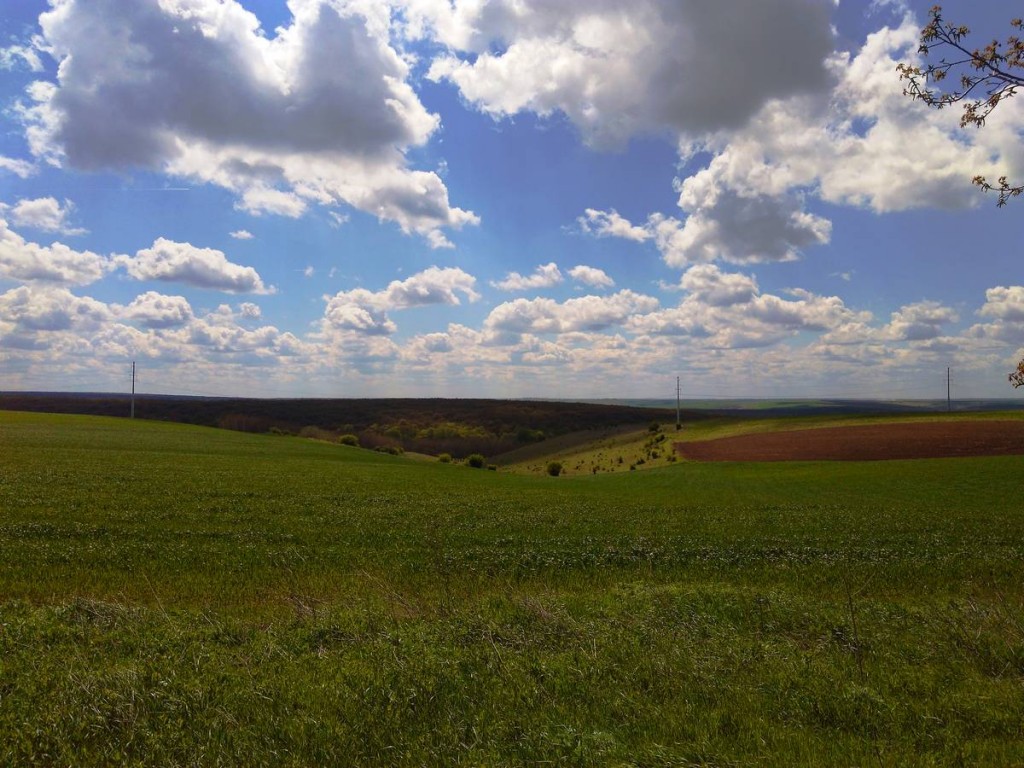
Starting from Constanţa on DN3 to Valu’s Trajan, we pass by the Murfatlar Vineyard and from Murfatlar we go down the Danube-Black Sea Canal, we pass by the Straja Youth Monument built from the bronze on the Danube-Black Sea Canal, passes by Straja and we continue our journey along the canal to Agigea, from where we enter DN39 and climb to Lazu to get back to Constanta.
In the Murfatlar region we can visit the Murfatlar cave ensemble, with „chalk” churches, a unique monument in Europe.
The house was built by the Greek painter Theodor Russo at the end of the 19th century.
The architecture of the building is influenced by the neoclassical style of the architect Pelopidas Couppa.
Built on four levels, the building has a basement and an attic, both higher. The socket was made of medieval extraction stone. Entrance doors are wooden and have a neoclassical style, is decorated with denticulate and capital, place inscribed monogram „TR”. Thus, the visitor can identify both the name of the original owner, the Greek Theodor Russo, and the year of construction, 1897.
The building is distinguished by its vertical symmetry, accentuated by windows. Each of the windows on the ground floor is equipped with a gable with acrotere (socket is placed on a frontron to support statues, vases and other ornaments) supported consoles in its upper part.
Above them are windows architrave (a typical construction element for classical architecture – which constitutes the bottom of the coping and which is supported by the column or the column head wall) supported by the console – Kariatidas, the same number typology.
Above the entrance doors can be seen two balconies with a simple hardware, supported from the side. A console supported by consoles is highlighted with spiral ornaments and a narrow frieze with leaves. Upstairs, between the windows one finds a hard-to-read inscription in Greek.
It is the largest complex for extreme sports practitioners in Romania. The total area of over 8,500 square meters is divided into 4 extreme sports areas for the following activities: rollerblading, skateboarding, BMX, MTB, mountaineering, bouldering, trial, jumping and scooter.
Located near Lake Tabacarie, the Gravity Park sports complex has become a popular recreational activity among the young and extreme sports lovers in Constanta.
Whether you are a beginner or an advanced, if you want to go out to practice such a sport or just want to relax, Gravity Park is the right place for you.
Visitors and sportsmen have a range of facilities such as sports equipment rental, climbing courses, spectators’ stands, professional sound system, toilets, showers and cabinets.
The official opening took place on May 24, 2008, with an extreme show, attended by the best athletes from Romania. Besides the demonstrations of rollerblading, skateboarding, trials, dirt jump and fast climbing, a Best Trick contest with total prizes worth 3,000 euros was also held. Since then, competitions of this kind have taken place every year.
Entrance to the park is free of charge.
For those who are not 18 years of age, parental consent is required to enter these extreme sports areas. They must complete a written statement and accept the rules of the complex.
Access is free for all those with adequate sports equipment and a badge of access. Also, the helmet is mandatory.
Protective equipment (helmet, knees, armrests, gloves) and all necessary climbing equipment (rope, harness, rags, boots, carabiners) can be rented.
You can come to the park with your own helmet. However, in the case of personal climbing equipment, it must be checked by the mountaineer at Gravity Park before climbing the tower.
Located in the heart of the Murfatlar vineyard, the museum was founded in 1970 under the patronage of the National History and Archeology Museum in Constanta.
In the museum there are dozens of exhibits of remarkable value, which certify the practice of wine culture on the territory of Dobrogea for more than 2,000 years. Stopping in the times when the grapes crushed with their feet in stone tanks to get the drink, we remember the robustness of the Dacians who drank the wine without mixing it with water.
Instead of the silver or gold cups, the Dacians served wine from wooden pots, from large deer horns that passed from hand to hand.
Some historians believe that the grape planting in the area is preceded by the cultivation of the first grain, and historical references to Proto-Dacian wine and whether it was made by Strabo and Diodorus in Sicily.
Address: Bdul Alexandru Lapusneanu No. 184b, Constanţa
Phone: 0241 517 051
Address: Street Adamclisi 1A, Constanta 900001
Phone: 0726 329 905
Address: Aleea Trandafirilor, Murfatlar
Telephone: 0241 232 000
The „Danube On 2 Wheels” Project is co-financed by the European Union though the European Regional Development Fund, within the INTERREG V-A Romania – Bulgaria Programme.
The total eligible value of the project is EUR 497.713,26, of which EUR 423.056,25 represents the value of the European Union contribution through the European Regional Development Fund.
The content of this website does not necessarily represent the official position of the European Union. The initiators of the site are the sole responsibles for the information provided through the site.
www.interregrobg.eu
The Constanţa – Murfatlar – Agigea – Constanţa route
Touristic objectives in area
Theordor Russo House, Constanta
Gravity Park, Constanta
Wine Vineyard and Museum, Murfatlar
Zodiac Hotel Restaurant
Integra Restaurant
La Povești Garden Restaurant
Do you want more details?
- About the project
- AISSER
- Useful information
- Indicators
- „Danube on 2 Wheels” Tourist Center (ACTIS Sport Club – Calarasi)
- „Danube on 2 Wheels” Tourist Center ( „Sport for you and me – Sports Club Canoeing” Association – Belogradchik)
- Level – Medium / Advanced
- Duration – 1 day
- Distance – 45 km
- Surface – paved / unpaved
- Bicycle type – MTB


AdvancedSend a message