Route route is Dorobantu – Boşneagu – Ulmu – Făurei – Zimbru – Plevna
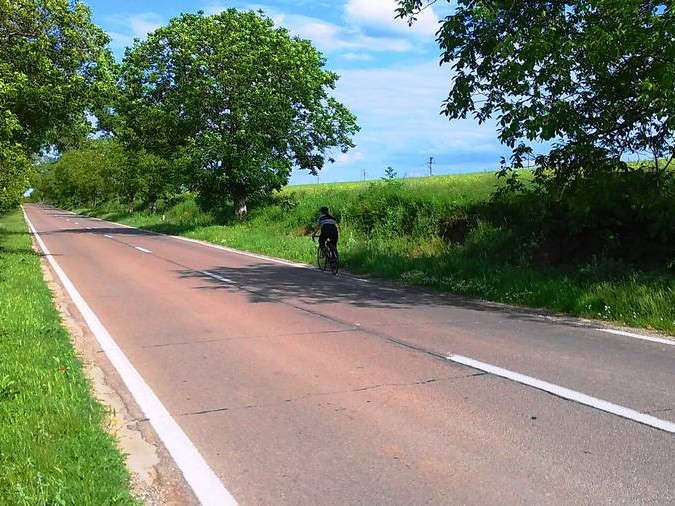
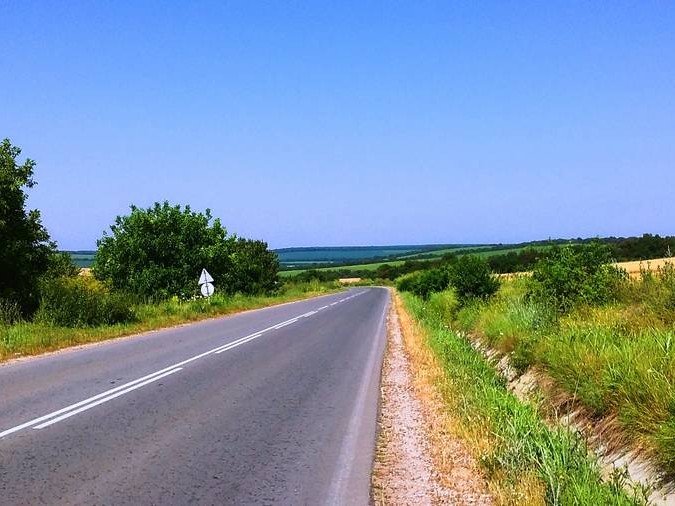
We are transported by the organizing team to Dorobantu, from where we go on the DJ304 and pedal north towards the villages of Boşneagu, Ulmu and Făurei, on the banks of Balti Mostiştea which was declared a natural reserve and where swans can be admired.
We continue the route on the DJ304 to the village of Zimbru, and from here we have about 7 km to Pleven village. Here we will rest shortly after which we will go back to Dorobantu.
The Călăraşi Municipal Museum is located in the old headquarters of the City Hall. The building was built for this administrative destination in the years 1886-1887 and therefore, in early January 1888, the institution began its activity in a new building.
From an exhibition point of view, the museum chronologically follows the history of Calarasi localities, starting with the presentation of the archaeological discoveries, mentioning the first documentary references, presenting the moment of the change of status (1833 – the capital of the county) and the moment of liberation (1852), but also the moment when the whole a Romanian people passed through difficult moments (war of independence, World War I and World War II), ending with the Communist period and the contemporary period.
The exhibition space dedicated to the aforementioned is located on the ground floor of the building, in 8 rooms which are technically arranged museum. Upstairs, the building has exhibit activities as well as creative activities.
The museum is listed on the Historical Monuments List.
The church is built of brick, on a strong foundation; has the shape of a 29 m long shop, 10.5 m wide and 21 m high, with two smaller apses, and the altar apse is larger in semicircular shape.
The church portal is rectangular, open and delimited by four round shaped supports. In the nave and in the narthex, the ceiling is straight and is supported on two rows of supports, five of which are in round shape, in beautiful letters, which remind us of the birth of Bethlehem’s church.
The church has two domes, one is open and the other closed, the latter serving as the tower of the church where the two bells are installed. The roof and the domes are covered with galvanized sheets.
The painting of the church, made in oil and in a realistic style, has a great artistic value, being executed in 1908 by the Italian painter Orest Cantini. The altar screen and the two episcopal chairs, of special nobility, are made of oak wood by the sculptor M. Babic in 1908. The emperor’s icons, the icons of the Holy Holder and Saint John the Baptist on the altar screen, are chained together with silver , having a spectacular work.
The congregation has a functional parish library. The congregation organizes parochial activities with church attendees as well as parish students.
The Church of St. Dumitru is a voivodal construction built in the time and command of voivode Matei Basarab and his wife, Elina, in 1648. This fact appears in the stone carved inscription, written in relief letters, which is located above the door entry into the narthex.
In 1900, the church was rebuilt again inside and out, covered with tiles, equipped with new windows and doors, at the expense of the administration of the royal property of the locality. In 1937 it was covered with new tiles, the mosaic floor was laid and it was built with concrete walls and forged iron, also at the expense of the royal property. In 1970, consolidation works were carried out at the tower and portal and it is painted in Byzantine style.
The inscription written in 1900 is located above the church entrance door and is written in capital letters incised on the white marble plate: „This holy church of Matei Basarab was rebuilt by His Majesty King Carol I in the year MCM and XXXIV the first of his reign. „
The inscription in 1937 is located above the church entrance door under the inscription above and is written in capital letters incised on the white marble plate: „In 1937 this holy church was repaired entirely by His Majesty King Carol of II. „
The church has a plan in the form of a 26.7 m long ship, 9.3 m wide and 25 m high, and is made of thin bricks with a hydraulic chalk wall with a width of 1.45 m. It has a single tower massively located over the nartex, which also has the role of bell tower. The total built area is 230 square meters.
Address: Dorobantu village, Călăraşi
Telephone: 0758 317 675
Address: Soseaua Chiciului nr. 7, Calarasi 910088
Phone: 0721 908 413
The „Danube On 2 Wheels” Project is co-financed by the European Union though the European Regional Development Fund, within the INTERREG V-A Romania – Bulgaria Programme.
The total eligible value of the project is EUR 497.713,26, of which EUR 423.056,25 represents the value of the European Union contribution through the European Regional Development Fund.
The content of this website does not necessarily represent the official position of the European Union. The initiators of the site are the sole responsibles for the information provided through the site.
www.interregrobg.eu
Dorobantu – Plevna and return route
Touristic objectives in area
Municipal Museum, Călăraşi
St. Nicholas Orthodox Cathedral, Calarasi
Saints Dumitru and Nestor, Monastery
Boier Moflea Pub &Grill
3 stars Albatros Tourist Complex and Restaurant
Do you want more details?
- About the project
- AISSER
- Useful information
- Indicators
- „Danube on 2 Wheels” Tourist Center (ACTIS Sport Club – Calarasi)
- „Danube on 2 Wheels” Tourist Center ( „Sport for you and me – Sports Club Canoeing” Association – Belogradchik)
- Level – Beginners
- Duration – 1 day
- Distance – 44 km
- Surface – paved
- Bicycle type – cursor


BeginnersSend a message